
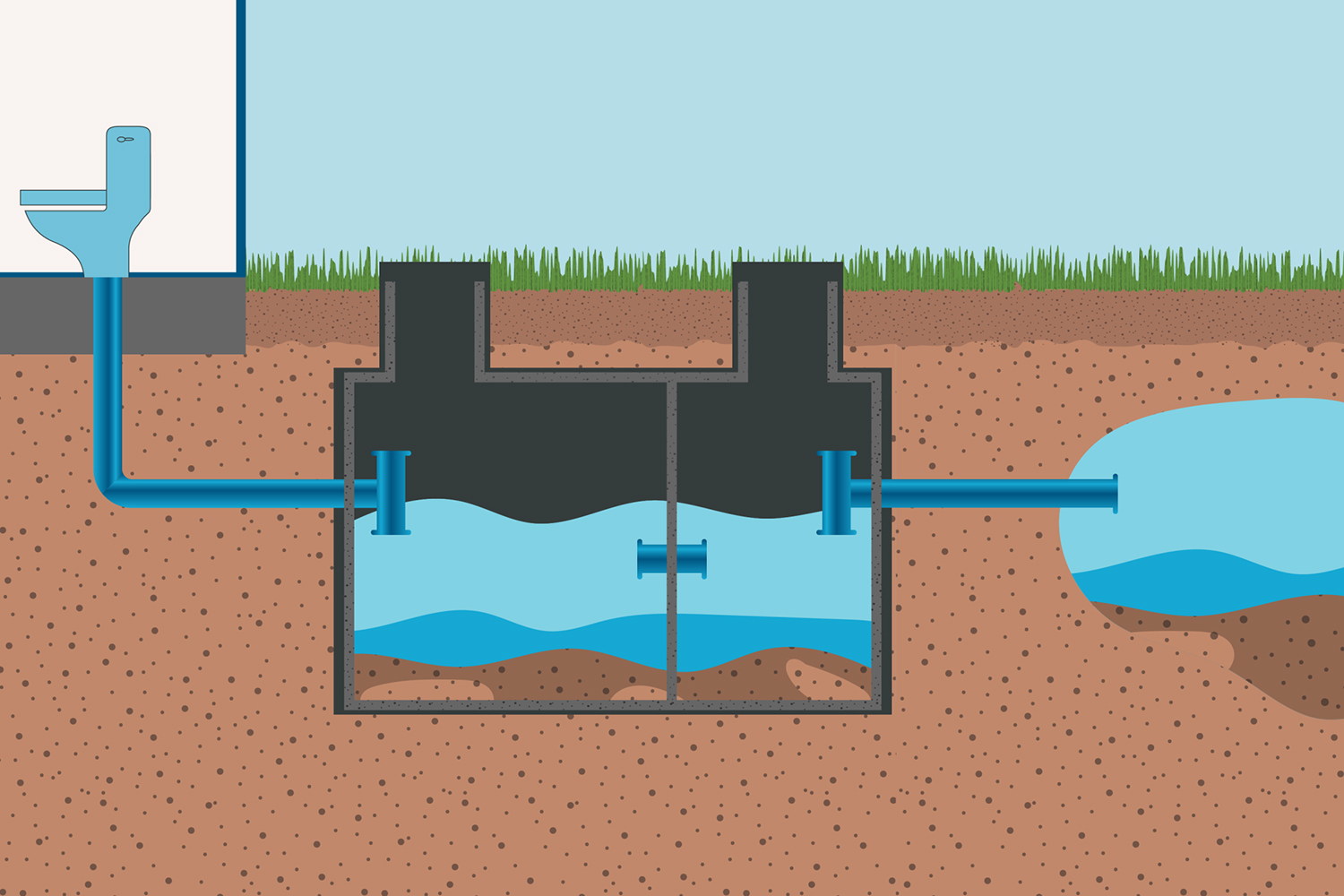
Proper maintenance of your septic system is essential for protecting your health, preserving property value, and ensuring the longevity of the system. Here’s a concise guide to help homeowners care for their septic systems effectively:
Do’s:
- Know Your System’s Layout: Identify the location of your septic tank and absorption field. Keep a diagram handy for service visits and maintain records of all maintenance activities.
- Regular Inspections and Pumping: Inspect and pump your septic tank regularly. The New York State Health Department recommends pumping every two to three years or when sludge and scum exceed one-third of the tank’s liquid depth. Using a garbage disposal can increase solids by up to 50%, necessitating more frequent pumping.
- Conserve Water: Fix leaking faucets and toilets, run dishwashers and washing machines only when full, take shorter showers, and install water-saving fixtures to reduce the load on your septic system.
- Redirect Water Sources: Ensure that roof drains, surface water, sump pumps, and footing drains are directed away from the septic system to prevent overloading.
Don’ts:
- Avoid Chemical Drain Openers: Instead of caustic drain openers, use boiling water or a drain snake for clogs. Keep hazardous chemicals like paints, oils, and pesticides out of the system, as they can disrupt the biological processes essential for waste breakdown.
- Dispose of Grease Properly: Do not pour fats or grease down the drain; they can solidify and cause blockages.
- Steer Clear of Additives: Refrain from using commercial septic tank additives, as they often do more harm than good.
- Protect the Absorption Field: Avoid driving over the absorption field, planting trees or shrubs nearby (roots can clog the system), and covering it with hard surfaces like concrete or asphalt. Grass is the best cover to prevent erosion and aid in water removal.
- Mind What You Flush: Do not use the toilet as a trash can. Dispose of non-degradable items, such as sanitary products and wipes, in the trash to prevent system blockages.
Recognizing System Failure:
Be vigilant for signs of a failing septic system, including sewage surfacing over the absorption field, sewage backups in the house, or unusually lush, green grass over the absorption area. Addressing these issues promptly can prevent health hazards and environmental damage.
Failing septic systems can:
- Cause a serious health threat to your family and neighbors
- Degrade the environment, especially lakes, streams and groundwater
- Reduce the value of your property ·
- Be very expensive to repair
How will I know if my septic system is failing?
Be alert to these signs of a failing system:
- Sewage surfacing over the absorption field (especially after storms or in the spring when groundwater is usually highest)
- Sewage back-ups in the house
- Lush, green growth over the absorption field
- Slow draining toilets or drains
- Sewage odors
- The presence of nitrates or bacteria in your drinking well
What is a septic system and how does it work?
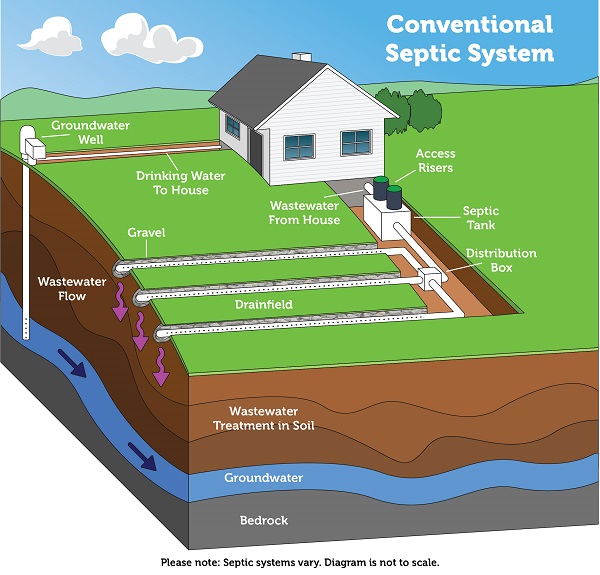
A typical septic system contains two major components: a septic tank and an absorption field, sometimes called a leachfield (see Figure 1).
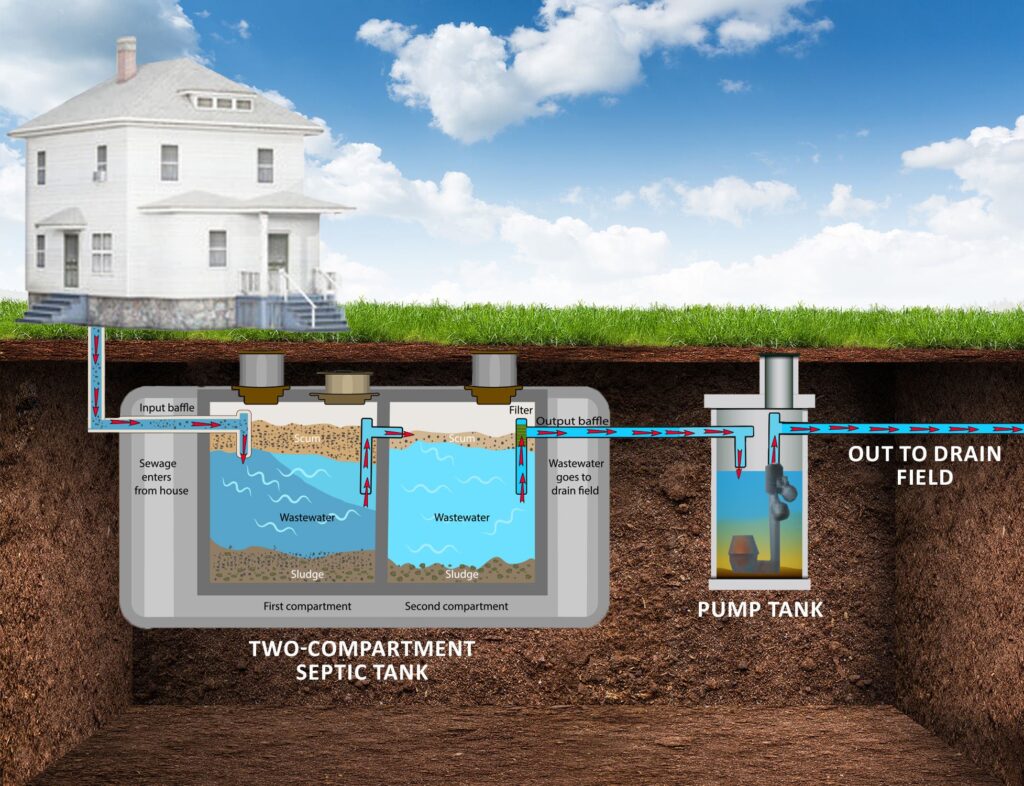
Wastewater from the house flows into the septic tank. The septic tank is made of concrete, fiberglass or metal and is buried and watertight. The size of the septic tank is based on the number of bedrooms in the residence. All septic tanks must have baffles (internal slabs or tees) at the inlet and outlet to insure proper flow patterns (see Figure 2).
A septic tank allows heavier solids to settle and be partially decomposed by bacteria to form sludge. Light solids and grease (scum) float to the top of the tank where they are retained by the baffles until the tank is pumped. The wastewater from the septic tank (effluent) flows into a distribution box which contains several outlet holes to uniformly distribute the wastewater to the absorption field. Solid plastic pipes, connected to the distribution box outlets, carry effluent to the absorption field.
The absorption field contains a series of underground perforated pipes of equal length, laid in trenches about 18 – 24 inches deep, filled with clean stone or washed gravel. The length of trenches required is based on the number of bedrooms in the residence and the soil percolation rate. The effluent coming out of the septic tank contains many microorganisms and pollutants.
When this water flows into the perforated pipe in the absorption field, the effluent exits through the holes in the pipe and trickles through the rock or gravel where it is stored until it is absorbed by the soil. As the effluent enters and flows through the soil, many of the bacteria that can cause diseases are filtered out. Some of the other smaller pathogens, such as viruses, are trapped and held (adsorbed) by the soil molecules. Soils can retain certain nutrients such as phosphorous and some forms of nitrogen.
If I maintain my septic system as recommended, how long will it perform satisfactorily?
Most septic systems will fail eventually. These systems are designed to have a useful life of 20 to 30 years, under the best conditions. Eventually, the soil in the soil absorption field becomes clogged with organic material, making the system unusable. If the septic tank is not routinely pumped out, the absorption system will need to be replaced much sooner.